
Denmark
Timeline of 5 Key Events
1911 Foundation
The trade union for barbers and journeyman was founded in Denmark.
1927-1961 The longest conflict
In 1927, a conflict arose when employers in the capital demanded significant cutbacks, affecting the barbers and hairdressers. For instance, one demand was a wage reduction of 17% for men and 28.5% for women.
The employers sought the right to hire barbers and hairdressers who were not union members, and they wanted to cut the lunch break in half.
The conflict became bitter and lasted nearly 34 years. The barbers and hairdressers established so-called "Kamp- stuer" (Battle shops) known as “Figaro”. These later evolved into the Figaro salons.
Regarding the establishment of a collective agreement was finally resolved through negotiations on January 5, 1961.
The agreement included provisions for a 45-hours workweek and special arrangements for public holidays.
The minimum wage was set at 196.20 DKK per week, plus 5% of the individual's earnings above that amount.
Furthermore, it was part of the agreement that the Figaro salons had to close.
1973 The European cooperation initiative
A European hairdressers' cooperation initiative was established, and a study of hairdressers' working environments was quickly launched; the harmful effects of chemical products were assessed, and meetings were organized with manufacturers and the international association of salon owners. Efforts were made within the EC to tackle the issue of hazardous substances
The European collaboration also encompassed international competicions.
1991 Occupational Pension
Occupational pension are introduced.
2006 The Exclusivity Agreement is overturned in Strasbourg
January 1, 2006. The "exclusivity agreement” which prohibited unionized salon owners from hiring non-unionized hairdressers, was overturned by the European Court of Human Rights in Strasbourg. This has had a significant impact on unionization rates since then.
2007 The foundation of Knowledge Center for Hairdressers and Beauticians
The "20-øre fund" was established, thereby laying the groundwork for the creation of the "Knowledge Center for Hairdressers and Beauticians.". This initiative was prompted by a study showing that only 8% of the members did not suffer from headaches, skin problems, physical ailments or respiratory issues related to their work.
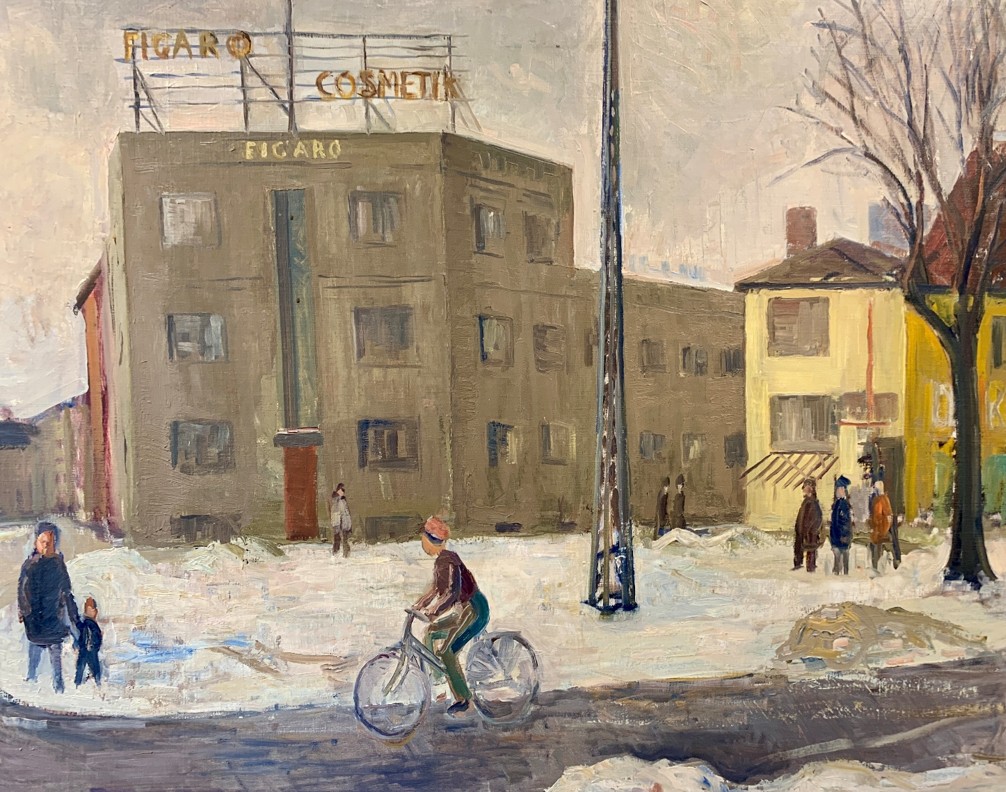
The House named Figaro. Headquarters of the Danish Hairdressers- and Beauticians Union until 2024.
1952 - KRN
[photo 2026 LJAN]