Norway
1912
The hairdressers' trade union was founded, but it was exclusively for men. Upon its establishment, it was named Barber og Frisørsvenners Forening
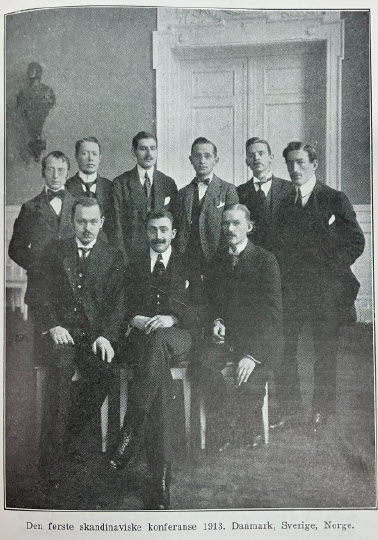
1913
The first Scandinavian meeting took place.
1928
Women's hairdressers were admitted to the union. Historical records note: "When women's hairdressers joined, emphasis was placed on the fact that in other countries - particularly Sweden - price levels were higher than in Norway thanks to the organization, despite the lower standard of living there."
1931
Women's hairdressing gained status as a distinct skilled trade.
1934
Minimum wage rates were negotiated for men's and women's hairdressers. The wages for women's hairdressers (women) were half those of men's hairdressers (men); however, if a women's hairdresser was male, he was entitled to the same wage as a men's hairdresser. At that time, the workweek was 48 hours, with 12 days of paid vacation.
1960
Changes were made to the Price Act regarding horizontal pricing; the new legislation improved the economic situation for the hairdressing trades, and hairdressers' wages rose significantly, reaching a "normal level."
1951
ILO (International Labour Organization) Convention No. 100 mandated equal pay for equal work and for work of equal value.
Despite this, women's hairdressers did not earn the same as men's hairdressers until sometime in the 1970s.
1994
A new education reform was implemented in Norway. The training program lasts four years, and the final qualification - certified by the Frisørsvenners certificate - is "Hairdresser." 2000
We became a nationwide trade union. All hairdressers who are members of Fagforbundet are united in the same union.
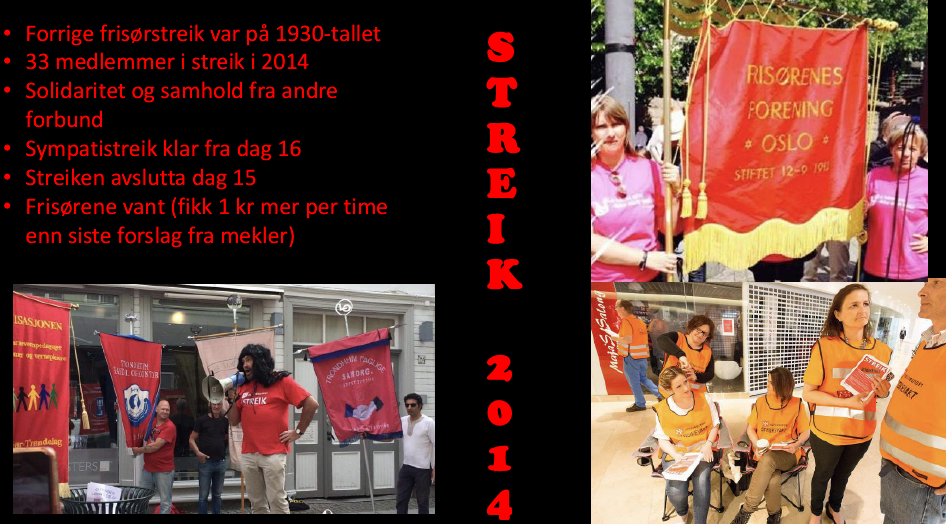
2014
We went on strike for 15 days for higher wages.